

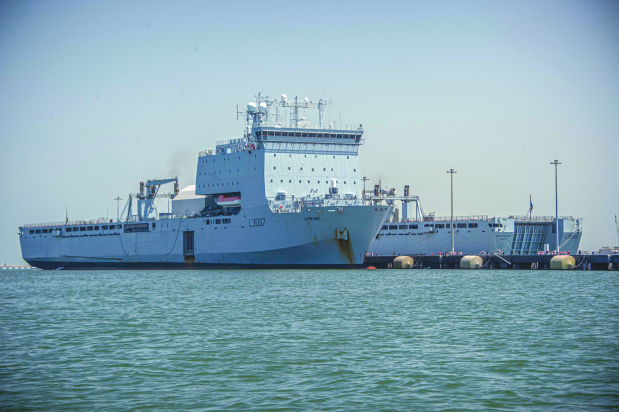
The Royal Navy’s mighty mother ship has sailed back to the UK for the first time since it was first arrived in the Gulf theatre in 2017.
Royal Fleet Auxiliary (RFA) ship Cardigan Bay ended its four-year tour duty during which it supported four British minehunters operating in the Middle East and other naval assets of allies and regional partners.
It served as a floating base and provided at-sea support to the Royal Navy and Bahrain-based 34 nations Combined Maritime Forces (CMF) coalition units.
In addition, it helped specialist dive teams and experts testing automated mine warfare systems, helicopters moving personnel and supplies around the region, and as a ‘petrol station’ and supermarket for the minehunters.
“RFA Cardigan Bay has provided an exceptional service during her four years in theatre,” said UK Maritime Component Command (UKMCC) Commander in Bahrain, Commodore Ed Ahlgren.
“The Bay Class has demonstrated her versatility in working closely with our own Royal Navy units and those of our coalition partners.
“Her recent contribution to Exercise Artemis Trident 21, where she took on the role of flagship, underlined her impressive capability and stalwart support to the Mine Countermeasures Community”.
The GDN reported that more than 700 Navy personnel from the US, the UK, Australia and France took part in the largest minehunting exercise in the Gulf. The two-week exercise concluded on April 29 and aimed to test the four nations’ ability to keep sea lanes secure and open in the Arabian Gulf.
RFA Cardigan Bay has participated in contingency operations, as well as assisting with the rescue of a sunken tanker in the Indian Ocean, supporting HMS Montrose in June 2017.
The mother ship has the ability to hold enough fuel to fill multiple ships at a time, as well as approximately 200 tonnes of provisions means that she can provide sustainment to units at sea for extended periods.
The ship has been in heavy demand since arriving in 2017 – the second time in the past decade Cardigan Bay was deployed to the Gulf to support minehunters.
“RFA Cardigan Bay is a critical component of the MCM Force,” said Commander UK Mine Countermeasures Force, chief of staff, Lieutenant Commander Max Wilmot.
“She provides sustainment at sea for Royal Navy minehunters, as well as coalition partners in the region.”
The ship will undergo extensive maintenance and refurbishment on her return to the UK.
Cardigan Bay has now traded places with RFA Lyme Bay – the second time she’s relieved her sister ship on what is ‘a well-trodden path of maintaining that continuous presence in theatre’, according to Cardigan Bay’s outgoing Commanding Officer Captain Sam Shattock.
British tax payers have paid more than £12 million (around BD6m) over the past five years in order for the UK to maintain its defence footprint in Bahrain.
The UKMCC complex opened in 2018 and sits alongside the US Fifth Fleet Naval Headquarters in Juffair.
Last year, the UK Naval Support Facility in Bahrain upgraded its waterfront facilities to allow larger vessels to berth at its base in Juffair with the completion of a key jetty project as it expand its presence in the Gulf.
The new quay development has given access to Royal Navy’s frigates and destroyers to berth and carry out maintenance and support facilities at the facility in Bahrain.
Britain’s new aircraft-carriers and future flagships HMS Queen Elizabeth and HMS Prince of Wales could make port visits to the base.
sandy@gdn.com.bh
&uuid=(email))