

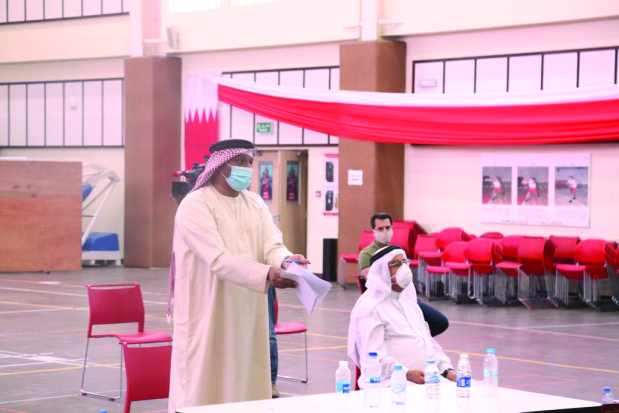
QUALITY of water in plastic bottles and the impact of improper storage has prompted a heated debate among members of Bahrain’s largest municipal council.
Councillors at the Northern Municipal Council claimed there has been a noticeable increase in illnesses such as kidney stones and gallstones which they attributed to improperly stored plastic bottles.
During their weekly meeting, they also highlighted the phenomenon of water bottles being sold on the streets and out of vehicles under the scorching heat.
The council demanded efforts to protect public health be stepped up by increasing the number of inspection campaigns.
However, officials from the Health Ministry informed councillors that 26 inspectors are assigned to conduct random campaigns on around 30,000 establishments selling food and beverages, with three inspectors are assigned to local factories.
“We have seen an abundance of bottled water on the market – both locally produced and imported – and we don’t know if these products adhere to health requirements,” said technical committee chairman Abdullah Al Qubaisi.
“There are water bottles sold at traffic lights and within neighbourhoods from buses and cars, and in this heat imagine what the temperatures do to the plastic.
“This is a threat to public health as water is something that every single person needs to consume on a daily basis.
“We have seen all these offers such as 40 bottles for BD1.500 and people are attracted to special offers fully trusting in the seller’s proper storage, which may not always be the case.”
He also highlighted recent inspection campaigns conducted by the Industry, Commerce and Tourism Ministry which resulted in warehouses being shut down for the improper storage of food items with manipulated expiry dates.
His concerns were shared by council chairman Ahmed Al Kooheji, who discussed the environmental threat posed by plastic bottles.
“Water bottles are being sold and distributed out of vehicles and near traffic lights with no proper cooling mechanism in place and we don’t fully understand how plastic reacts to heat and its impact on our health,” he added.
“We need to move towards using reusable bottles such as stainless steel which can be used repeatedly while also making sure the quality of water is monitored and healthy.”
Regulated
However, the Health Ministry’s food control department acting director Faisal Al Sari reassured councillors that all water factories in Bahrain are licensed, regulated and monitored, while all products in the market are inspected before being sold to consumers.
He also said that inspections are conducted on a regular basis with samples taken for testing at the ministry’s laboratories.
“Throwing around accusations that those products on the market are harmful and that the ministry isn’t doing its due diligence are all unfounded as we are sparing no efforts when it concerns people’s health,” he said during the meeting.
“We check storage facilities and monitor and test the quality of products through laboratory testing of samples and we have a protocol in place.
“However, these men selling water bottles from vehicles or at traffic lights are not our jurisdiction, as they fall within the mandate of the Industry, Commerce and Tourism Ministry, the municipalities and the police because they are considered wandering vendors.
“There are violations present all around the world and not just in Bahrain, but that doesn’t mean we aren’t doing our jobs properly.”
Mr Al Sari added that Bahrain implemented both GCC and international specifications for the quality of water, while testing is conducted on a regular and random basis to ensure factories and companies adhere to requirements.
The debate prompted the council to approve a proposal to conduct an extraordinary meeting with the Health Ministry and the Industry, Commerce and Tourism Ministry, as well as the Northern Municipality, to discuss and regulate the process.
The council also approved imposing stricter fines on factories and companies that violate technical and health specifications, while also conducting random testing for all water products.
reem@gdn.com.bh
&uuid=(email))