

Manama: A new system that will dramatically cut down waiting times at the border is being discussed by Bahraini officials and their Saudi counterparts.
The One-Point Entry System, which is still under study, will enable motorists to stop at a single booth to clear all formalities to cross King Fahad Causeway rather than going through different customs, security and immigration checks.
Tourism officials are hoping the hassle-free access to Bahrain will increase the number of visitors from the GCC.
“Bahrain and Saudi officials are exploring different options to reduce waiting time at King Fahad Causeway,” said Bahrain Tourism and Exhibitions Authority acting chief executive Shaikh Khalid bin Humood Al Khalifa.
“One of the many options is the One-Point Entry access for motorists.
“I cannot give further details on this as relevant bodies are working on it.
“But what I can confirm is that another option being discussed is to increase the number of immigration cabins by 70 per cent.”
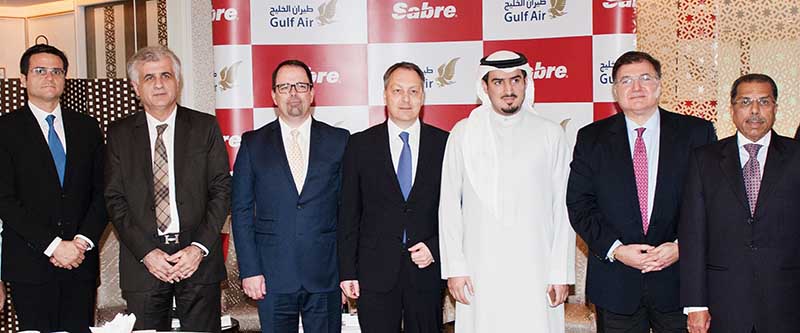
The proposals were revealed yesterday during a round-table discussion, ‘How Technology is Transforming the Bahrain Travel Industry – Partnership In Synergy’, organised by Gulf Air and Sabre Travel Network Middle East at the Capital Club in the Bahrain Financial Harbour.
It was attended by hospitality and travel industry leaders who discussed trends shaping the travel sector and its contribution to Bahrain’s economy.
Shaikh Khalid said delays at the causeway were mainly due to lack of data capturing at the Saudi border.
“There are options being explored where the data will be captured prior to the arrival of the car to ease the process,” he added.
Bahrain’s business community in the past proposed the installation of electronic gateways at the causeway in dedicated “commuter lanes” where motorists could operate using their CPR card or a fingerprint scan.
Another proposal by the Bahrain Chamber of Commerce and Industry (BCCI) was to open a pedestrian border on the causeway.
Meanwhile, Shaikh Khalid said according to last year’s figures Saudi tourists travelling globally spent BD7 billion, which he said Bahrain planned to tap into.
“We conducted a study and found that a Saudi visitor spends an average of BD121 per day in Bahrain and our aim is to take this number to BD200 by providing wide range of services,” he explained.
“When I came into office in 2013 the average stay was 1.8 days and our target is to increase this length of stay to 2.5 days by 2018.
“Bahrain is no longer a weekend destination as by the year 2018 we expect to have 18,000 rooms (in hotels and apartment buildings) for visitors to help them stay longer.”
He said the Bahrain government recognised the importance of the travel and tourism industry, especially as part of the country’s diversification process following a slump in oil prices.
“Our neighbours are doing a good job,” said Shaikh Khalid in response to GCC states’ aggressive approach in the sector.
“Each country has its own characteristics and Bahrain is authentic in its own way.
“I am optimistic about the future of the tourism sector with a double digit growth in three years.”
He also spoke of a pilot project to collect real-time data from five-star hotels in the country on room occupancy, tourist nationality and money spent.
He was speaking during a session, titled ‘Economy and Industry Outlook’, along with representatives from the Economic Development Board (EDB), Gulf Air and Sabre.
EDB tourism and leisure executive director Jerad Bachar, who was among the panellists, said a total of $32 billion was being spent on different infrastructure projects in Bahrain including the $1bn airport expansion project.
“We expect the economic impact of tourism on Bahrain’s GDP (gross domestic product) to reach $1bn by 2020,” said Mr Bachar.
He added that over 11 million tourists visited Bahrain last year which officials expect would increase this year with the opening of new resorts and five-star properties.
During the session, Sabre Travel Network Europe, the Middle East and Africa senior vice-president Harald Eisenacher spoke of an increase in mobile applications used for hotel and flight bookings.
“There are several online applications offering lowest airfare and best flight plans that are being used by tourists globally,” he said.
Mr Eisenacher added that Bahrain’s travel industry was expected to increase its GDP contribution to five per cent this year.
sandy@gdn.com.bh
&uuid=(email))