

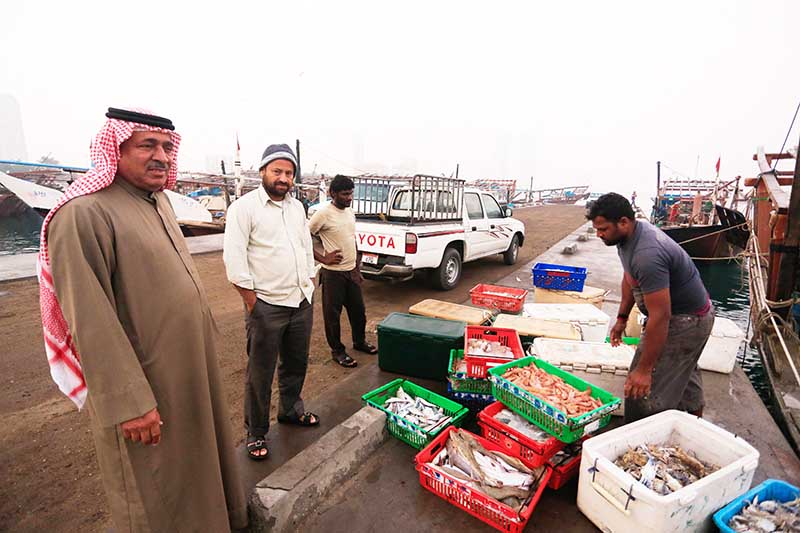
Bahrain: Price of fresh fish could increase by up to 20 per cent in the next two months due to a hike in fuel prices.
The Professional Fishermen’s Society said an increase in the cost of Jayyid petrol and diesel used to power fishing vessels would affect the prices of fish and other seafood in local markets and even restaurants.
The cost of Jayyid fuel went up from 80 fils per litre to 125 fils on January 12, less than two weeks after diesel price rose from 100 fils per litre to 120 fils, along with kerosene and aviation fuel.
The higher tariffs are part of a raft of measures adopted by Bahrain to cut government spending in an attempt to offset the impact of reduced oil prices, which
fell below $28 per barrel last week.
Bahraini fisherman Waheed Al Dossary, who is a senior member of the society, said costs would increase especially as summer approaches because fish retreat into deeper water.
“Seafood, like the rest of food products, is becoming more expensive,” he told the GDN.
“It is a supply and demand process and currently the supply is witnessing a drop which is a result of illegal fishing.
“The prices are currently stable because the weather is optimum for fishing and the productivity is relatively high, but a 20pc hike will be witnessed in two months when temperatures go up.
“This is because fish go deeper into the sea and fishermen will need more fuel to catch them.
“The process costs fishermen a lot of money.
“Huge amounts are also spent on white bread used as bait. Fishermen can buy up to 3,000kg of white bread for just one fishing trip hoping to pull in a
good catch.”
Delicacies such as hammour (grouper) currently costs around BD7 per kilo, while kanad (narrow-barred Spanish Mackerel) costs between BD3 to BD4 per kilo, and safi (rabbitfish) and sherry cost between BD1.5 to BD2.5 per kilo.
However, most of them are sold whole to retailers, who add a whopping 40pc to the original cost, said Mr Al Dossary.
“Fishermen meet with retailers and bargain by the lot,” he explained.
“[Retailers] get it for moderate prices but charge customers 40pc additional to the original price.
“Therefore, prices must be monitored by the government because not only does the fisherman do all the work and sell his fish for a cheap price, but the customer is also being exploited.”
Meanwhile, society president Jassim Al Jeran demanded cash compensations for all professional fishermen.
“I call upon authorities to allocate cash as compensation for what is being spent on fuel, or at least part of it,” he said.
“Most of the profits fishermen gain will soon be used to cover fuel expenses, which will sure affect their living conditions.
“Fishermen are getting poorer over the years and a solution must be found as soon as possible.”
The price of premium Mumtaz petrol rose by 60pc to 160 fils per litre last week, while government subsidies on electricity and
water will also be lifted from March 1.
Other moves include a top-down study to identify ways to trim civil servants’ allowances, including government ministers, and an initiative already launched to make overall savings of 30pc in all government departments.
In October, the government also reduced the number of ministries from 18 to 16 and merged 10 government agencies into five as part of a public sector streamlining, having axed meat subsidies on October 1.
shahlaa@gdn.com.bh
&uuid=(email))