

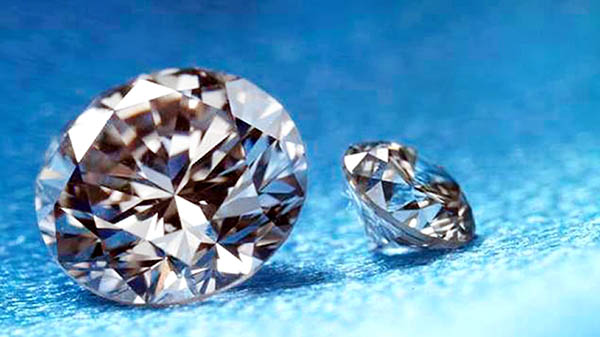
BAHRAINI jewellers have been warned to be on their guard against fake diamonds that could penetrate the market through rogue traders abroad.
So-called chemical vapour deposition (CVD) diamonds are produced or “grown” through an artificial process that creates the circumstances necessary for carbon atoms in a gas to settle in crystalline form.
The imitation gems are made of the same material as naturally-occurring diamonds and are difficult to detect, but special devices and techniques have been developed to detect
the fakes.
Diamond laboratories, such as those run by HRD Antwerp Istanbul, are greatly concerned by the appearance of synthetic gems on the market, the company’s international sales manager Ramazan Mete Alak
told the GDN.
“The most important threat that the CVDs pose to any diamond market is that they undermine consumer confidence,” he said.
“The threat is getting bigger day by day and it has affected the market in Istanbul, especially the CVDs coming in from Dubai and India.
“We see and hear that there are no CVDs in Bahrain yet, but that doesn’t mean there isn’t anything synthetic in the market.
“There are so many synthetics trying to penetrate the market and the Bahraini authorities must be careful about this possibility.”
Mr Alak estimated that of the 25 tonnes of diamonds produced annually, up to two per cent were synthetics.
“The diamond trade is built on trust,” he said.
“We either have to have good technology to certify natural diamonds or the consumer should have the knowledge to determine their quality.”
The industry expert was speaking yesterday on the sidelines of a lecture on CVD synthetic diamonds given by representatives from the Industry, Commerce and Tourism Ministry’s Precious Metals and Gemstone Testing
Directorate.
It was organised by the Bahrain Chamber of Commerce and Industry’s Pearl, Gold and Jewelry Committee at its headquarters in Sanabis.
Committee head Deema Al Haddad called for more stringent laws to protect consumers from the looming threat.
“We have not come across any synthetic diamonds in Bahrain since we started the screening process for CVDs last year, but that may be because they are not out for sale in the open,” she said.
“They might not have been brought for testing, but there could be some CVDs which we are not aware of.
“Despite Bahrain’s market being clear for now, the presence of technology to make synthetic diamonds in neighbouring GCC countries such as Dubai is
worrisome.
“If they manage to mass produce CVDs using this technology and offer it at a lower price than natural diamonds, we cannot rule out the possibility of these synthetics taking over the market.”
Ms Al Haddad said she intended to meet with the Industry, Commerce and Tourism Ministry and MPs to seek their assistance in formulating a law that would protect consumer rights in this regard.
However, committee vice-chairman and major diamond dealer, Al Sarraj Jewellers managing director Mohammed Malim argued that Bahrain was “fully equipped” to fight the threat.
“With well trained and educated experts, we are closely monitoring and co-operating with the lab and from time to time samples are checked,” he said.
“We have the advanced machines and we do screen diamonds at every level even before they enter the country.
“In the diamond trade, we are all connected and consumers should be careful that they buy diamonds only from reputed and known dealers, otherwise it could be risky.”
Mr Malim estimated that the diamond trade was worth $5 million to Bahrain annually, with up to 4kg of the gems being sold.
raji@gdn.com.bh
&uuid=(email))