

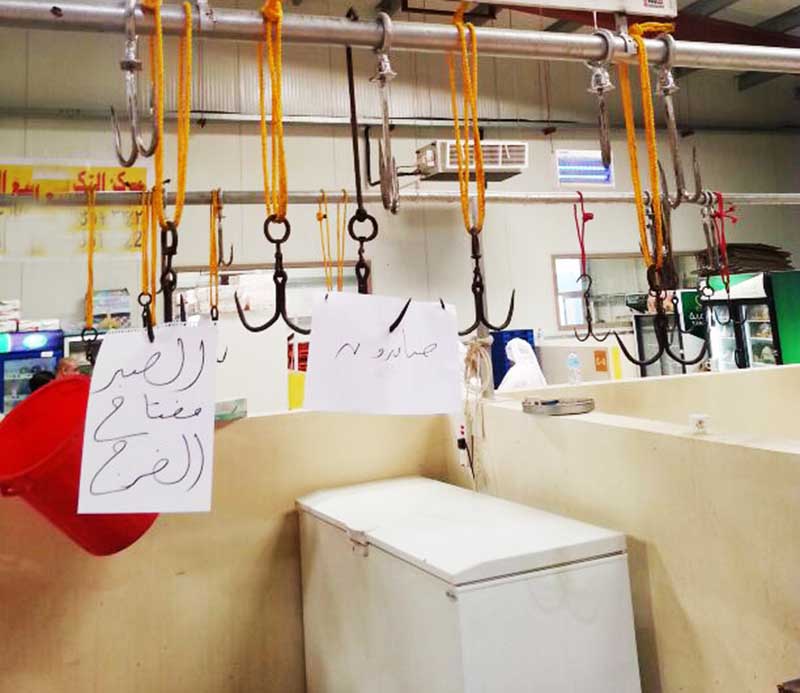
Manama: Butchers boycotting red meat over subsidy cuts stormed a Muharraq Municipal Council meeting yesterday, demanding government action.
Meat traders in the Muharraq Central Market have refused to do business since the subsidy cut came into effect at the start of the month and were joined by the majority of Manama’s 120-stall market as the retail price of once-subsidised meat jumped from BD1 per kilo to BD3.200 overnight, prompting a drastic drop in demand.
Pledge
Eighteen Bahraini butchers, including an 80-year-old trader, forced their way into the council headquarters in Busaiteen yesterday holding posters pledging to continue their protest against the lifting of government subsidies.
They put the council meeting on hold and refused to leave the chamber until councillors officially registered their seven-point demand, which included compensations for losses and changing the retail price of meat to BD1.500 per kilo.
Council chairman Mohammed Al Sinan asked his colleagues to vote on the document and referred it to the Prime Minister’s office.
“The butchers have no other choice but to go on strike or else they will be buying meat that will rot – I mean the public is behind the social media hashtag ‘Let It Rot’ since the price per kilo is now BD3,” Mr Al Sinan told the GDN.
“Even if it is BD2, demand is still zero as people can’t afford that price and I fully support the butchers in their demands as it has been 18 days with no real solution.
“Butchers are on the verge of going bankrupt and the seven written demands presented to us include returning to business, compensation from the government for their losses and changing the retail price to BD1.500, in addition to better quality meat.”
Only a few butchers in the Manama Central Market have started accepting meat from the Bahrain Livestock Company (BLC), the country’s main supplier of red meat, but the majority remain on strike, while no one in the Jidhafs and Waqef central markets have accepted deliveries.
Ibrahim Al Faraj, who co-ordinated yesterday’s protest, said butchers in Muharraq were also uncertain of their future as the existing market was set for demolition and a new location not yet finalised.
“We can’t renew our commercial registrations, we can’t renew work permits, we can’t even acquire government services and now we can’t even get food into the mouths of our children – even if we buy meat, who will buy it,” he said.
“Butchers accept the retail price of BD1.500 per kilo for lamb and wholesale price of BD1, but customers are in shock.
“BLC is reducing prices day by day and even if we reach the desired price, we must then work on regaining the trust with the public in order to return back to normal.”
Bahraini butcher Ibrahim Salem said around 40 Bangladeshi support workers at the market could not receive
salaries this month.
“We want to work, our workers want to work, but now we can’t – I mean if BLC wants workers then it can hire me – I have 40 years of experience and it would mean I get some income rather than doing nothing,” he said.
“The last resort would be going on demonstrations, we are from Muharraq and loyal to the leadership and can’t do that, we don’t want to end up doing that but desperate people do desperate things.”
Desperate
Bahrainis have started receiving compensation for meat subsides being lifted with direct payments of BD5 for breadwinners, BD3.500 for adults dependent and BD2.500 per child.
The cuts are part of the government’s efforts to limit public spending – driven in large part by the price of oil, which has almost halved since last summer.
As a result, the country’s debt ceiling was raised from BD5 billion to BD7bn last November so that the government could borrow further.
Reducing subsidies – which cost the government BD935 million in total last year – is seen as a key way to make national savings.
Other expected subsidy cuts set to be introduced in phases over the coming years include those on electricity, water and petrol.
mohammed@gdn.com.bh
&uuid=(email))