

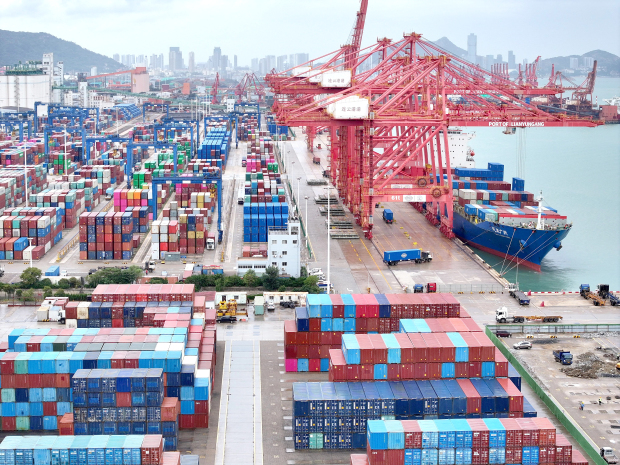
CHINA’S export growth accelerated in May, buoyed by robust demand for chips, autos and other high-tech goods fuelling the global AI boom, providing policymakers some relief as energy price shocks from the Iran conflict weigh on broader demand.
A surge in global AI investment has helped the world’s top manufacturer offset the export hit many had expected from the Middle East turmoil. But signs are emerging that stockpiling linked to higher energy costs is fading, with prices rising and overseas buyers starting to run down inventories as they hold out for a ceasefire.
Exports expanded 19.4 per cent from a year earlier in US dollar value terms, customs data showed yesterday, outpacing the 14.1pc gain in April and a 15pc rise tipped by economists.
Imports notched another strong month, climbing 27.4pc versus a rise of 25.3pc a month prior. Economists had forecast growth of 25pc.
“Chip price increases continue to support exports, with memory prices rising 20pc month-on-month, pushing integrated circuit export growth to 111pc for the month,” said Xing Zhaopeng, ANZ’s senior China strategist.
China’s exports of automated data processing equipment soared 66.1pc in value terms year-on-year, high-tech products rose 50.9pc and shipments of cars jumped 39pc, the data showed.
“Looking ahead, the AI story is far from over – chips are rewriting China’s trade landscape,” Xing added.
The AI boom has driven strong demand for semiconductors powering data centres and advanced electronics, playing to China’s manufacturing strengths.
But beyond AI, there are signs of strain in other sectors that suggest momentum may be starting to fade. Furniture exports, for example, rose just 1.9pc year-on-year in May, while toy shipments fell 7pc and footwear exports dropped 10.4pc.
Separate factory activity data also showed a steep drop in new export orders last month from April’s two-year peak, when warehouse managers reported ‘booming’ business amid a scramble by foreign factories to lock in supplies.
&uuid=(email))