

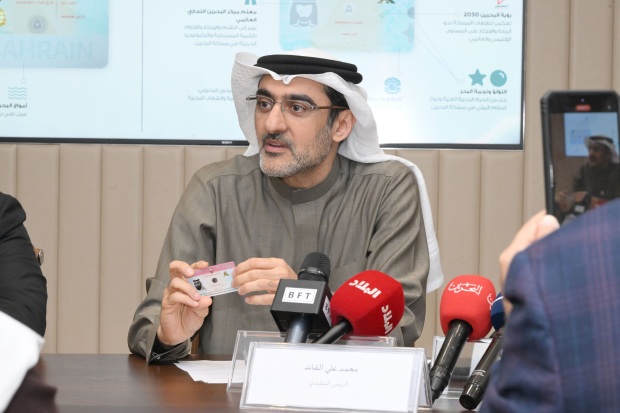
Bahrain will be the first country in the GCC to have a cutting-edge ‘travel application-ready chip’ integrated into its new smart identity cards, in line with global standards issued by the International Civil Aviation Organisation (ICAO).
The new chip would embed biometric and identity information right into the new smart cards, which were showcased yesterday during a Press conference conducted by the Information and eGovernment Authority (iGA).
Embedded information can be read by countries around the world, however, iGA chief executive Mohammed Ali Al Qaed cautioned against relying solely on the new cards as travel documents.
“People should still travel with their passport as well, but in the future, this might be the only document required when travelling to certain countries,” he added, during the press conference, which took place at the iGA headquarters in Isa Town.
“Bahrain is the first GCC country to activate the travel application within the identity card chip, in co-ordination with the Nationality, Passports and Residence Affairs.”
The new smart cards have also been redesigned to integrate elements of Bahraini culture and identity, including the Sail Monument, World Trade Centre and a pearl oyster and the hamour fish paying homage to the island’s maritime history.
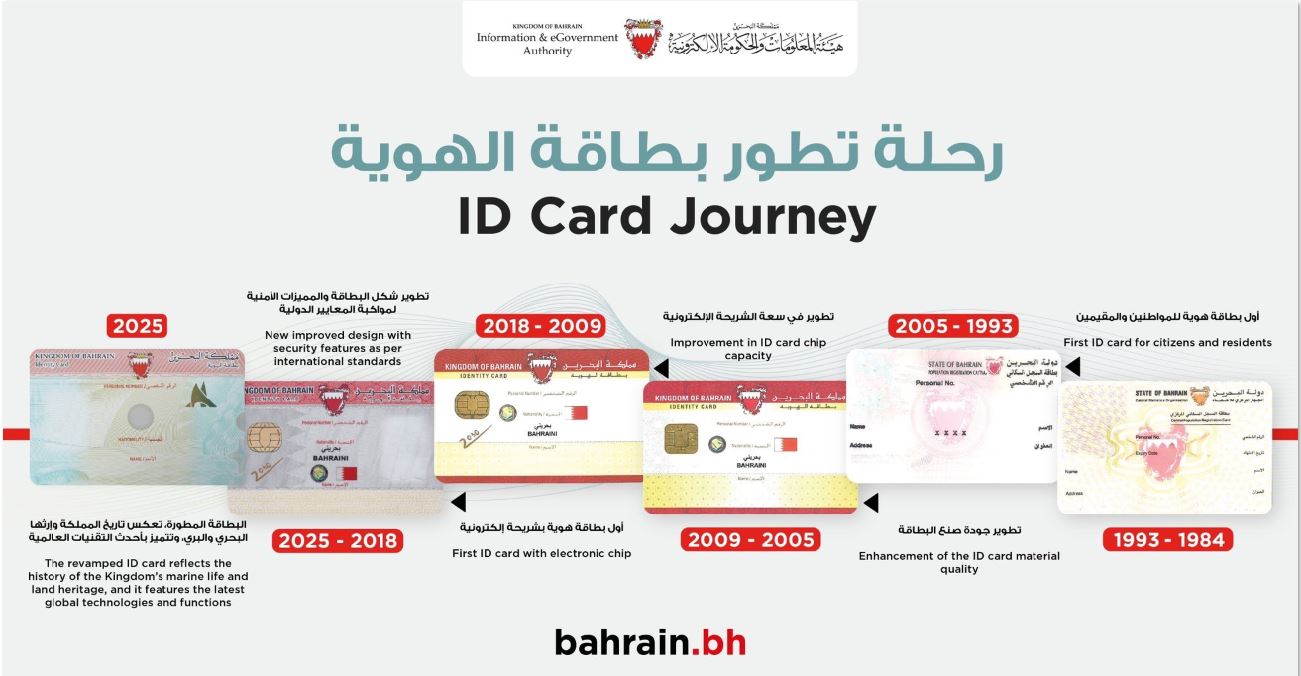
The evolution of ID cards since 1984
According to an iGA statement, the card showcases ‘cultural and historical elements details embedded in the new ID card design as it reflects Bahrain’s rich history spanning over 3,000 years, from the Sumerian civilisation and the ancient Dilmun era, to the Kingdom’s marine heritage and wildlife, including pearling and fishing–which were once key pillars of the economy.’
“The design also incorporates symbols representing Bahrain’s modern landmarks and cultural identity.”
The new cards will also have a slew of anti-counterfeiting measures embedded like the use of laser engraving, as well as transparent and semi-transparent areas on the card to make forgery impossibly difficult.
In addition, the cards, which are being rolled out only when a person’s current CPR expires, will be made of polycarbonate material, resistant to breakage, scratches, heat and wear and tear, increasing its lifespan substantially.
“The new printing process is also much faster and reduces the government’s expense of issuing and renewing smart cards,” Mr Al Qaed added.
naman@gdnmedia.bh
Top stories for today:
Suspect arrested
Unstable weather alert
New iGA centre offers more efficient access to services
&uuid=(email))