

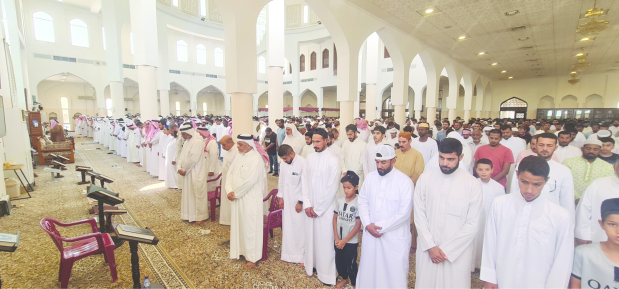
SPECIAL prayers have been held in mosques across Bahrain for the thousands of victims of back-to-back twin tragedies of a deadly earthquake in Morocco and a catastrophic flood in Libya.
His Majesty King Hamad earlier this week directed people to perform absentee funeral prayers across the country for the victims.
The Supreme Council for Islamic Affairs had assigned the Sunni and Jaffari Endowments Directorates to issue a circular to all khateebs and mosques in this regard, as reported by the GDN.
The King had also directed the Royal Humanitarian Foundation (RHF), led by his representative for humanitarian work and youth affairs Shaikh Nasser bin Hamad Al Khalifa, to assist in providing urgent aid to the victims. The RHF has said it is in contact with authorities concerned to assess the priority of supplies urgently required and is set to send the consignments as soon as possible.
During Friday sermons, preachers prayed to Allah the Almighty to bestow mercy and forgiveness upon the deceased, wishing the wounded a speedy recovery. Worshippers expressed their solidarity and support for the people in Libya and Morocco in their time of distress.
In the devastated Libyan city of Derna, residents and rescue workers were struggling yesterday to cope with the thousands of bodies washing up or decaying under rubble, after the flood that smashed down buildings and swept people out to sea.
The World Health Organisation and other aid groups called on authorities in Libya to stop burying flood victims in mass graves, saying these could bring long-term mental distress to families or might cause health risks if located near water sources.
The aid agencies spoke after a UN report showed more than 1,000 people had so far been buried in that manner since Libya, a nation divided by decade of conflict and political chaos, was hit on Sunday by torrential rain from a Mediterranean storm.
Thousands were killed and thousands more are missing with some estimates placing the death toll above 11,000.
The 6.8 magnitude earthquake that struck the High Atlas Mountains late on September 8 killed 2,946 people and injured 5,674, according to the latest official figures, making it Morocco’s deadliest since 1960 and most powerful since at least 1900.
While orderly camps of large, government-issued tents and military field hospitals have sprung up in some of the larger towns, parts of the rugged region are still surviving on donations left on roadsides by citizens.
&uuid=(email))