

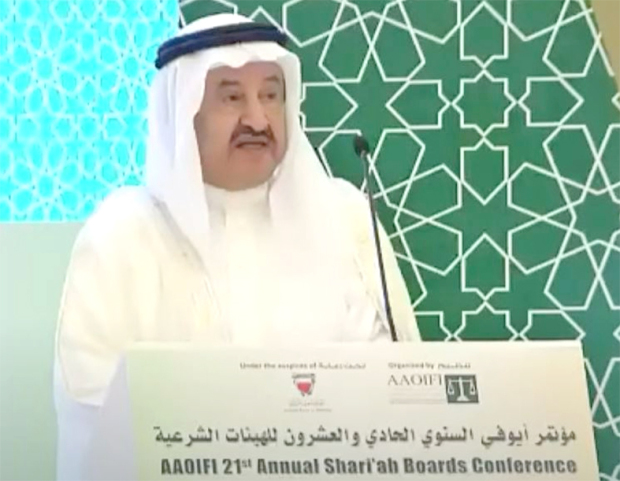
Islamic banks should diversify financing and investments away from placements with financial institutions, governments and asset management and into real economy sectors, a thought leader has said.
In his keynote speech during the 21st Annual Shariah Boards Conference at the Crowne Plaza in Manama yesterday, Shaikh Ebrahim bin Khalifa Al Khalifa, the board of trustees chairman at Accounting and Auditing Organisation for Islamic Financial Institutions (AAOIFI), said the proportion of financing and investment in the real economy relative to the financial economy was a source of concern, despite the extraordinary growth of Islamic banking assets.
According to the official, Sharia-compliant banks ought to direct more of their funds into real economy sectors such as manufacturing, infrastructure, small- and medium-sized enterprises (SMEs) and agriculture.
Shaikh Ebrahim also flagged a key concern related to the borrowing practices of governments of Muslim countries.
“Governments issue conventional bonds to raise funds which may not always be used for productive purposes or used to finance imports, resulting in repayment issues and a negative balance of payment that devalues the currency,” he explained.
Urging them to issue Sukuk instead, the AAOIFI board of trustees chairman said it was noteworthy that excessive debt, particularly for operating expenditure, lavish spendings, and deficit financing is always destined to lead to economic troubles.
“Not only is Sukuk a Shariah-compliant instrument, but it also has the added benefit of always being linked to productive assets or activities (such as infrastructure projects), meaning that funds can only be used for productive purposes and repayment is tied to the performance of those assets or activities, ensuring that the borrowings never exceed the means,” he explained.
“This can reduce the risk of repayment issues while increasing transparency and accountability.”
Talking about the Islamic banking sector’s global prospects, the official said total assets of the industry are currently valued at $3.374 trillion, and by 2025, they are projected to increase by an average of eight per cent to $4.94trn.
Bahrain-based AAOIFI is the world’s leading standard setting body for Islamic finance and around 70 regulators in 50 countries recognise its standards.
More than 1,000 global Islamic finance industry stakeholders have gathered for the two-day conference that ends today.
&uuid=(email))