

Bahrain is set to be the first host in the Middle East and North Africa (Mena) region for a major international forum exploring the role of space in diplomacy and economic development next month.
The ‘International Space Forum (ISF) at the Ministerial Level 2024 - The Gulf Chapter’ will take place in the kingdom on July 2 and 3, under the theme ‘Space as a game-changer for diplomacy and economic development in the region’.
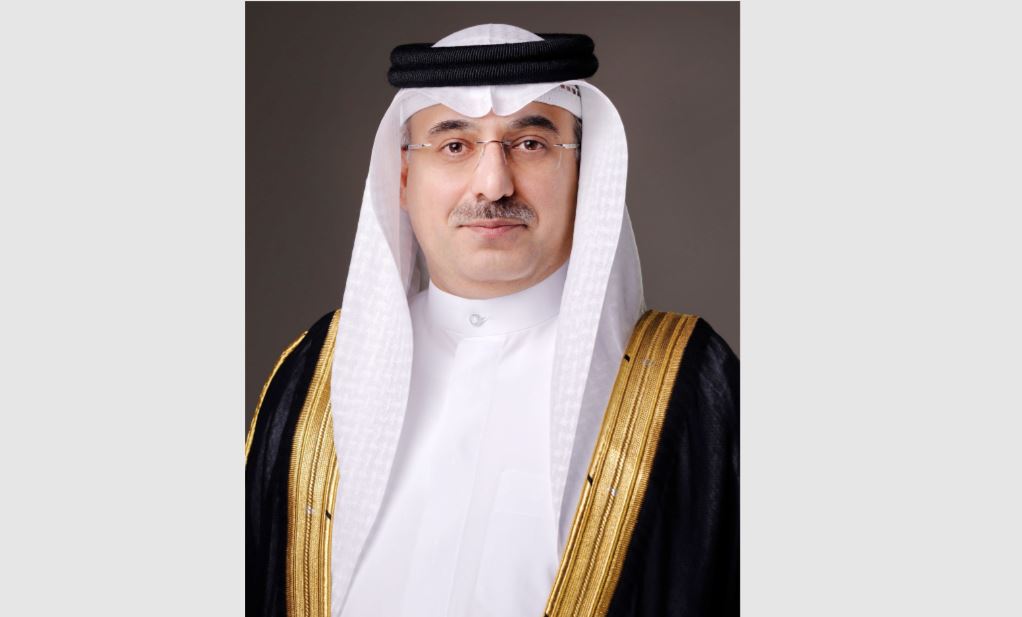
“The forum will highlight the remarkable development of the space sector in the Arabian Gulf region in particular and the Arab region at large,” Bahrain’s National Space Science Agency (NSSA) chief executive Dr Mohamed Ebrahim Al Aseeri said in a statement. Invitations to attend the forum have been extended to space leaders in Arab countries as well as around the world, with a focus on ministers and authorities in charge of space research, technology and education.
The sixth edition of the forum, being organised by the NSSA in co-operation with the Italian Space Agency and International Astronautical Federation (IAF), will discuss how space science and technology can contribute to a greater development of the Gulf region. There will be three keynote speeches focused on ‘Earth Observation: from technology to applications and services’; ‘Space exploration: a gateway to the Universe’; and ‘Space visions and policies: sharing experiences and best practices’.
“At the end of the forum, the delegations will endorse a final declaration, ‘The Manama Page’, detailing the view of the participating countries on their needs, perspectives and recommendations,” a spokesperson for the IAF said, in a statement.
“This Manama Page will be added to the Trento Space Statement, which was produced after the first ISF in 2016, Nairobi Page (ISF 2017), Buenos Aires Page (ISF 2018), Reggio Calabria Page (ISF 2019) and Panama City Page (ISF 2023).”
Founded in 1951, the Paris-based IAF is a leading space advocacy body with 513 members from 77 countries, including leading space agencies, companies, research institutions, universities, societies, associations, institutes and museums worldwide. “The importance of this conference lies in making Bahrain a regional and international hub for events and conferences specialised in the field of space science and technology,” Dr Alseeri added.
“This is one of the goals of the NSSA’s vision and Strategic Plan 2024-28, which is in line with His Majesty King Hamad’s royal vision to promote Bahrain to a position of international prominence in the field of space science to achieve comprehensive and sustainable development.”
The ISF comes as the kingdom gears up to launch its first ever completely Bahrain-made satellite ‘Almunther’ which is expected to be launched in the coming months.
The GDN previously reported that the 3U CubeSat nanosatellite will include four payloads fully designed, developed, assembled and tested by the Bahrain Space Team, for testing new inventions in space and responding to national requirements of earth observation data for achieving sustainable development.
The kingdom’s first foray into space was the launch of the Bahraini-Emirati satellite Light-1 from the International Space Station (ISS) in February 2022, after lifting off from Earth on December 21, 2021. It was named after His Majesty King Hamad’s book First Light.
naman@gdnmedia.bh
&uuid=(email))