

A total of 724 buildings in the heart of the Capital are already listed on the National Heritage Register, with a further 131 currently under study, it has been revealed.
The Bahrain Authority for Culture and Antiquities (Baca) detailed its processes for classifying, protecting and restoring heritage buildings, while ensuring private ownership rights are safeguarded.
The figures were disclosed in an official reply to a question by Parliament’s second deputy speaker Ahmed Qarata, who is also Capital Governorate constituency two MP (Old Manama), highlighting how preservation of Manama’s historic urban fabric is balanced with modern development and investment opportunities.
Information Minister Dr Ramzan Al Nuaimi, who is politically responsible for Baca, said the Authority’s approach is rooted in law, technical expertise and partnership with owners.
“Preserving Bahrain’s architectural and cultural identity does not mean freezing cities in time,” he said. “It means managing change intelligently, so owners remain partners in protection, investment and revival of heritage buildings, rather than feeling constrained by it.”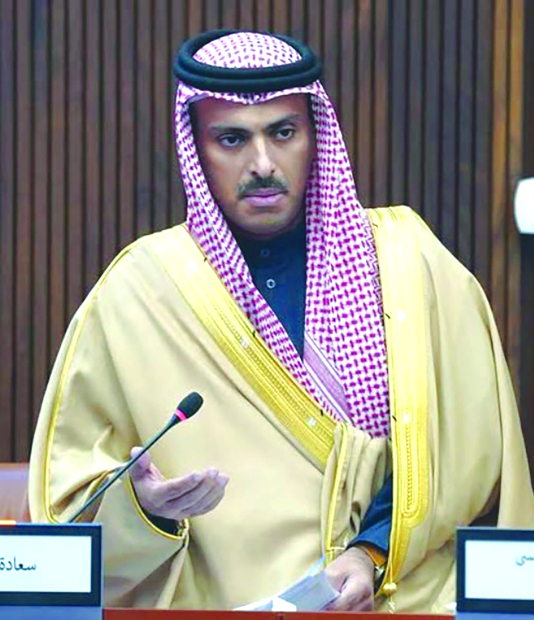
Dr Al Nuaimi
Baca operates under Decree-Law No 10 of 2015 and the antiquities protections enshrined in Decree-Law No 11 of 1995.
These laws impose strict controls on registered heritage properties. Owners cannot demolish, alter, renovate, or transfer ownership to non-Bahrainis without written approval from the authority. Even licensed works must be carried out under Baca’s direct supervision.
Adjacent zones around archaeological sites are also regulated to ensure that new buildings match the historical character of their surroundings.
“These controls are not arbitrary,” Dr Al Nuaimi explained. “They are internationally recognised standards applied locally to protect authenticity, rarity, historical value and the urban context of buildings.”
To ensure consistency in preservation works, Baca has prepared a 11-chapter technical restoration guide, currently undergoing final reviews by international experts before publication. The guide will become a national reference for restoration practices and will form the basis for future professional certification programmes in co-operation with Bahraini educational institutions.
The Authority revealed a three-stage classification mechanism used by specialists from antiquities, museums and heritage departments:
a Screening stage – rapid field assessment of architectural, artistic and historical indicators.
a Evaluation stage – deeper legal and technical review, including structural condition, authenticity, economic sustainability and urban context.
a Analytical research stage – comparative historical study for sites of exceptional national value before inclusion in the National Heritage Register.
Under the law, anything over 50 years old with historical or artistic value can qualify as an antiquity. The Prime Minister may also designate properties as antiquities for national interest reasons, regardless of age.
“We are moving from ad-hoc restoration to a fully standardised, science-based system that will raise the quality of heritage conservation across the kingdom,” said Dr Al Nuaimi.
Working with the Urban Planning and Development Authority and the Municipalities Affairs and Agriculture Ministry, Baca helped develop regulatory building requirements for historical zones.
These regulations allow:
a Commercial, tourism, cultural and educational uses in heritage buildings
a Investment by private sector entities and entrepreneurs
a Retention of ownership by original property holders
a Urban revival without sacrificing architectural identity
“The aim is to make heritage economically alive,” Dr Al Nuaimi said. “When a heritage building becomes a café, gallery, cultural space or boutique business, it is preserved through use – not abandonment.”
Baca confirmed it has acquired a number of archaeological properties over the years, with several files still under review.
Since 2022, the authority has restored and maintained seven properties at its own expense, with procedures underway for an eighth.
Owners wishing to renovate heritage properties now have clear guidance under Chapter Seven of the 2023 Prime Ministerial decision, which sets detailed rules for renovation, development and construction in historical areas, heritage gardens, buildings adjacent to archaeological sites and national heritage facilities.
These rules ensure modern interventions respect the archaeological and architectural character of the area.
“Today, owners know exactly what is permitted and what is not,” Dr Al Nuaimi said. “Transparency in regulations removes uncertainty and encourages compliance.”
The data highlights the scale of heritage concentration in the Capital’s second district, which encompasses the historic Manama suq and its surrounding urban fabric. Of the area’s 855 buildings, 724 are already registered, making it one of the kingdom’s most historically dense districts. “Our responsibility is to ensure that future generations walk these streets and still recognise Bahrain in their architecture, colours and urban character,” Dr Al Nuaimi added.
He stressed that Baca’s work is not only about preservation, but about revitalising heritage as a living economic and cultural asset.
“Heritage is not a burden on development,” he said. “It is a driver of identity, tourism, investment and national pride.”
mohammed@gdnmedia.bh
&uuid=(email))