

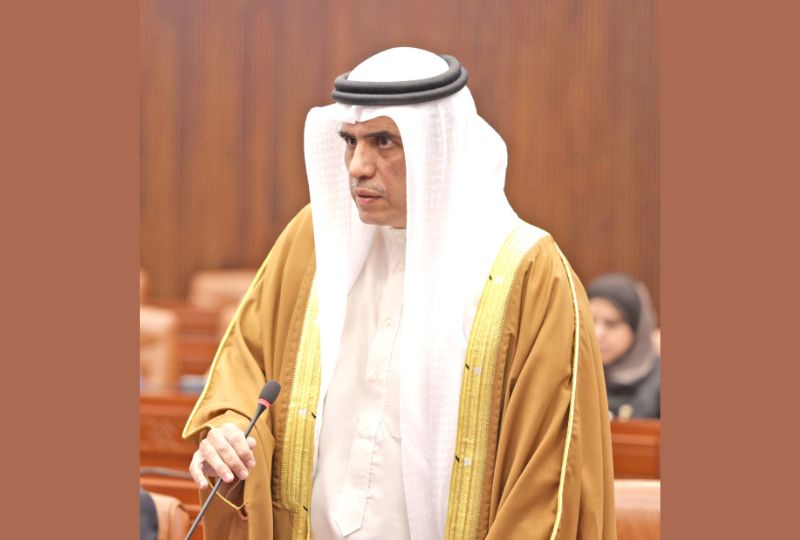
Bahrain is set to strengthen its global economic and technical alignment as the Shura Council prepares to approve two government-drafted laws.
These include Accession to the Locarno Agreement and ratification of amendments to the Organisation of Arab Petroleum Exporting Countries (OAPEC) agreement, transforming it into the Arab Energy Organisation.
Both drafts were reviewed by the foreign affairs, defence and national security committee, which endorsed them for approval ahead of Sunday’s debate.
Committee chairman Dr Ali Al Romaihi said the two agreements, though technical in nature, carry long-term strategic value for Bahrain.
“These agreements modernise Bahrain’s position within two critical international systems – intellectual property and energy co-operation,” he said. “They strengthen how we protect industrial creativity and how we engage with a regionally transforming energy landscape.”
The Locarno Agreement establishes a single international classification for industrial designs used by intellectual property offices worldwide.
By joining, Bahrain will align its design registration and examination procedures with global standards applied across dozens of countries.
Dr Al Romaihi said the step would enhance transparency, reduce procedural variation and reinforce confidence in Bahrain’s industrial property framework.
“It creates a more disciplined and reliable system for registering industrial designs, protects innovators, and integrates Bahrain more firmly into the international intellectual property architecture,” he said, noting that accession carries no additional financial burden on the state budget.
The second draft ratifies amendments approved in December 2024 to overhaul OAPEC into the Arab Energy Organisation with a broader mandate covering all energy fields – including renewables, electricity and emerging technologies and not only petroleum.
The amendments abolish OAPEC’s former judicial body and introduce modern dispute resolution mechanisms based on amicable settlement and arbitration. They also restructure governance, membership categories, financial rules and attach a detailed protocol on privileges and immunities for the organisation and its staff.
“This is a comprehensive legal and institutional update,” Dr Al Romaihi said. “It enables the organisation to keep pace with rapid changes in the global energy sector and strengthens joint Arab co-operation in future energy projects, investment and data exchange.”
He stressed that Bahrain’s annual contribution will remain BD210,000, while the kingdom gains access to wider technical and investment collaboration without increasing financial commitments.
Both have been already approved unanimously by MPs.
&uuid=(email))