

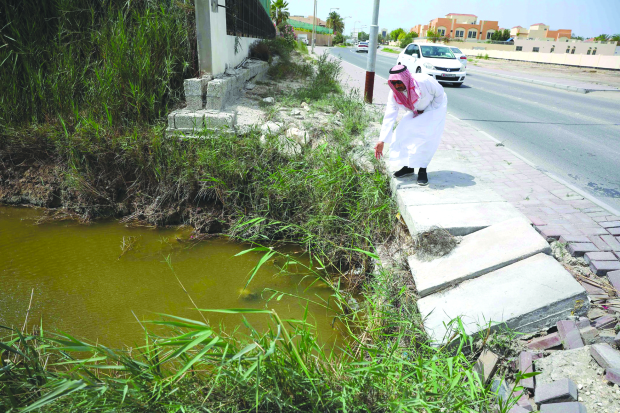
An SOS has been raised by concerned residents following a string of frightening night-time accidents in Hamala, where drivers have unknowingly plunged into unprotected rainwater channels running between homes in Block 1010.
The open channels – designed to carry stormwater to the sea – are barely visible after dark, with no fencing, warning signs or lighting to alert motorists unfamiliar with the area.
Several drivers have reportedly driven straight into the gaps, leaving cars partially submerged and occupants trapped inside screaming for help.
Area councillor Mohammed Al Dossary has now demanded urgent intervention from the Works Ministry, calling for immediate fencing and safety measures around the channels.
“This is no longer a minor municipal issue. It is a serious safety hazard that could cost lives,” Mr Al Dossary told the GDN during a visit to the site. “These channels are completely exposed and invisible at night. Drivers don’t realise what’s in front of them until it’s too late.”
According to residents, the channels snake between residential properties and stretch all the way to the shoreline. Some sections include hidden underground pipelines, while others remain wide open concrete drains that can easily be mistaken as part of the road, especially in poorly lit areas, drivers claim.
People living nearby say they have rushed out of their homes on multiple occasions after hearing loud crashes followed by cries for help.
“We have had to pull people out of their cars ourselves,” said one resident, who asked not to be named. “You hear the bang, then shouting. By the time you reach them, the car is already tilting into the channel. It is terrifying, especially for drivers travelling with child passengers.”
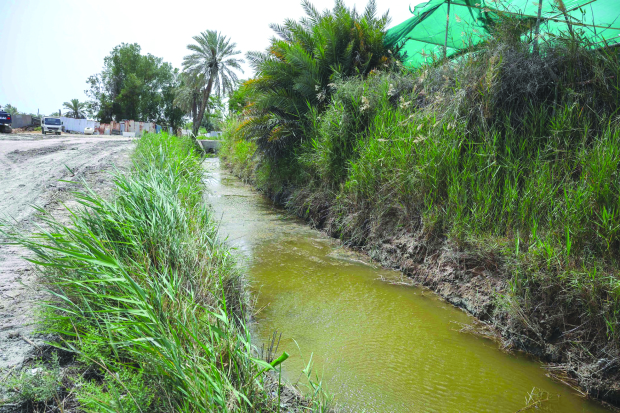
The unprotected channels
Mr Al Dossary said residents have formally petitioned the Northern Municipal Council after repeated close calls, fearing that a fatal accident is inevitable unless action is taken.
“These are not small ditches,” he said. “They are deep rainwater channels meant for heavy runoff. A vehicle falling into one is a serious incident.”
He stressed that the problem is particularly dangerous for delivery drivers, visitors and new residents unfamiliar with the layout of the neighbourhood.
“Locals may know where the channels are but outsiders don’t. At night, there is no way to distinguish road from drain,” he added.
Among the solutions proposed are installing protective fencing along exposed stretches, placing reflective warning signs, improving street lighting and covering certain drainage sections where feasible.
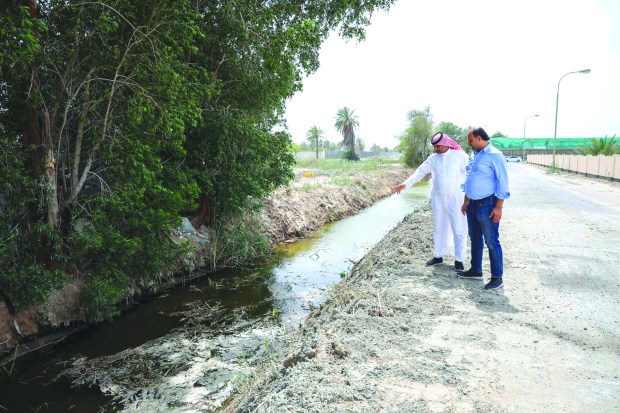
Mr Al Dossary highlights to the GDN the dangers of the unprotected channels
Residents say the situation becomes worse during the rainy season, when water levels rise and the channels become even harder to detect.
“In the rain, it looks like part of the street is flooded. Drivers don’t realise they are suddenly driving into a drain,” another resident said.
Mr Al Dossary has urged the Works Ministry to conduct an urgent site inspection and treat the matter as a priority safety case rather than routine maintenance.
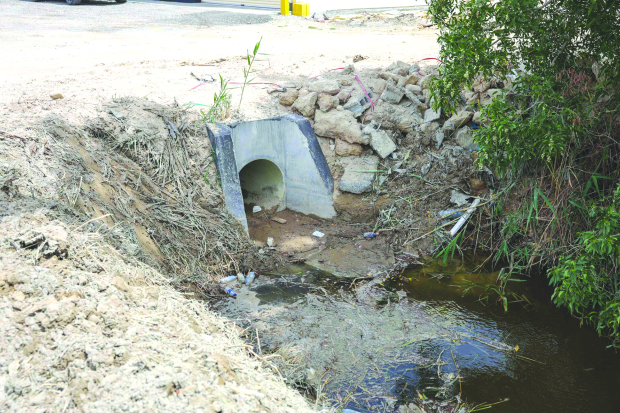
An underground rainwater pass connected to the channels
“These channels serve an important drainage purpose, but that cannot come at the expense of public safety,” he said. “Simple protective barriers could prevent these accidents from happening.”
For families in Block 1010, the fear is constant whenever they hear tyres screech after sunset.
“We don’t want to keep rescuing people,” a resident added. “We want this danger removed.”
mohammed@gdnmedia.bh
&uuid=(email))