

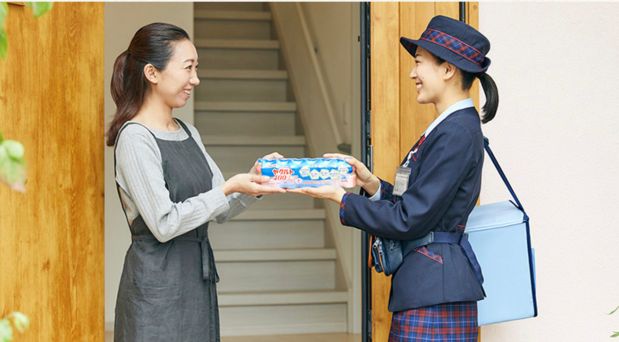
An army of dedicated women promoting good health are riding a wave of compassion in the global battle against loneliness.
For nearly a century they have navigated Japan’s labyrinthine neighbourhoods on bicycles and electric scooters. They are the ‘Yakult Ladies’; whose role has shifted from probiotic pedlars to a vital human shield against a chilling modern phenomenon: ‘Kodokushi’, or the ‘lonely death.’
Yakult is a Japanese sweetened probiotic milk drink, fermented with the unique ‘Lactobacillus casei Shirota’ bacteria. Since its inception in 1935, it has grown from a local digestive health supplement into a global household name, sold in its iconic 65ml or 80ml hourglass-shaped plastic bottles.
As Japan grapples with a ‘super-aged’ society, where a staggering one in 10 people is now aged 80 or older, these delivery drivers are stepping into the breach left by overstretched social services.
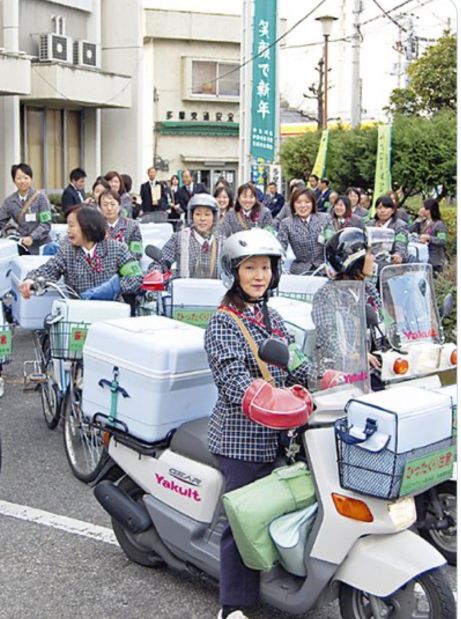
A fleet of ladies delivering products in Japan
This is a sophisticated grassroots welfare check on a generation that the modern world has heartlessly left behind. In a culture where ‘enryo’, a deep-seated sense of reserve and a refusal to ‘make a fuss’, often prevents the elderly from asking for help, these ladies provide a socially acceptable ‘excuse’ for a knock on the door and a bit of much-needed conversation.
Each visit offers a precious moment of human connection in a country where millions of seniors live in total isolation. These women are trained to spot the subtle red flags of a household in distress: a pile of unopened mail, curtains that remain drawn at midday, or a garden that has suddenly fallen into disrepair. These women are the eyes and ears of the community.
For many of Japan’s elderly, the arrival of the Yakult Lady is the only social interaction they might have in an entire week.
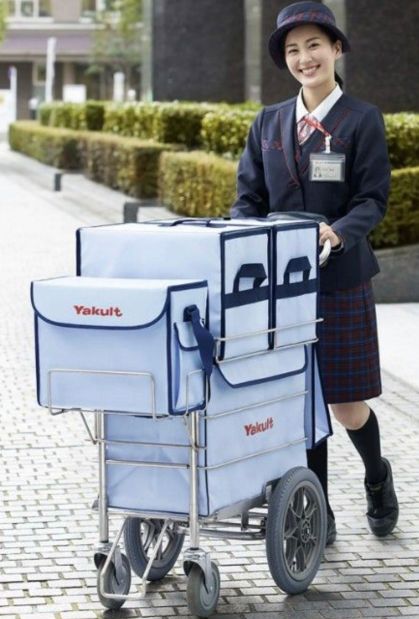
Approx. 37,000 women deliver drinks and products to companies and homes all over Japan
The company has now formalised this role through ‘Watch Over’ agreements with over 60 per cent of Japan’s local municipalities. These partnerships turn a commercial delivery route into a life-saving monitoring network. It is a low-cost, high-impact solution to a demographic time bomb that is ticking across the developed world.
The financial reality for these seniors is equally stark. Many subsist on modest state pensions that have failed to keep pace with the soaring costs of fuel and imported food.
The average Japanese monthly pension for a single person sits at approximately $1,100 (approximately BD414). When you consider that basic rent and utilities in urban areas can swallow more than half of that but the ‘luxury’ of a 150-yen (380fils) bottle of yogurt is a small price to pay for the security of knowing someone will check if you are still breathing.
These ‘Yogurt Yamamotos’ are often part of the same community they serve, mothers or active retirees who understand the value of a friendly face and a bit of ‘settai’ (hospitality). When a delivery woman notices something is amiss, she triggers a chain of communication that alerts local authorities or distant family members.
Yakult Ladies play a major role in disseminating the value of Yakult around the world. From their beginnings in Japan, today more than 80,000 Yakult Ladies are working to serve their local communities in 14 countries and regions across the globe.
While tech giants obsessed with efficiency look toward robots for delivery, Japan is doubling down on the human touch. They have realised that whilst a robot may deliver a package, it cannot, as yet, notice the scent of a gas leak or the trembling hands of a stroke victim.
As the sun sets over the rooftops, these women head home, having completed more than just a sales target. They have reinforced the fragile bonds of a society that is learning, out of sheer necessity, that the most important thing we can deliver to one another is a sense of belonging. In an increasingly digital world, Japan is proving that the secret to survival might just be found in a slow, steady knock on a neighbour’s door.
&uuid=(email))