

.jpg?20260401')
A significant legislative proposal that seeks to modernise Bahrain’s legal framework on abortion in medically justified cases is set for a vote in the Shura Council during its weekly session on Sunday.
The suggested changes to Decree-Law No (7) of 1989 on the Practice of Human Medicine and Dentistry updates provisions that align with advances in medical diagnostics, Sharia principles and comparative Gulf legislation.
The proposal includes two major amendments:
- Replacing the term ‘State of Bahrain’ with ‘Kingdom of Bahrain’
- Revising Article (19) to expand the legal grounds for abortion in two specific cases: When the mother’s life is at risk, or when a medical committee confirms severe foetal malformation that would compromise its survival or health after birth, provided the pregnancy has not exceeded 120 days.
Under the proposal, both cases would require the recommendation by a medical committee comprising three consultant physicians, the performance of the procedure in an authorised hospital, and a written consent from the woman or – in certain cases – her husband or guardian.
The Supreme Council of Health chairman in due course would specify medical standards, committee requirements and procedures for emergency cases.
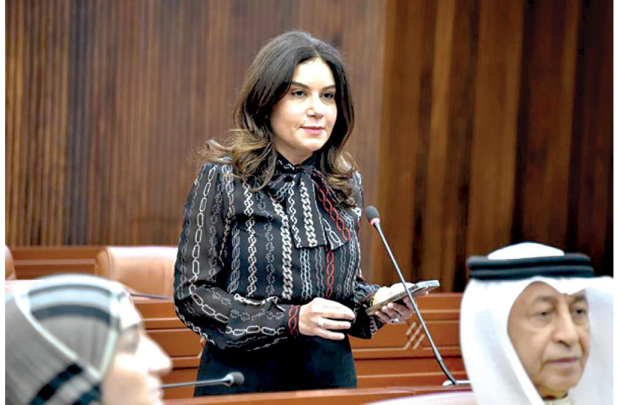
Ms Qassim
Shura Council woman and child committee vice-chairwoman Leena Qassim, who is spearheading the proposal, said the recommended changes respond to “decades of scientific change and real human needs”.
Pointing out that the law was written in 1989 – before the advent of modern diagnostic – she said, “Today, doctors can identify severe problems with the foetus early, yet our legislation offers no guidance. This gap places families and physicians in impossible positions.”
She maintained that the proposal was firmly rooted in Islamic jurisprudence.
“It does not open the door to elective abortion; it simply clarifies what Sharia and respected jurisprudential bodies have already permitted – intervention to protect a mother’s life and, before 120 days, in cases of confirmed severe foetal malformation. It is a humane and responsible update, not a departure from our values.”
Ms Qassim said members who backed her proposal were careful to ensure that safeguards remained strict.
“Every provision is designed to prevent misuse. The process requires specialist committees, certified reports and oversight by the Supreme Council of Health. This ensures that abortion is never taken lightly and is only permitted when absolutely necessary.”
The proposed amendments also mirror legal approaches in the UAE, Qatar, Kuwait and Oman – countries that allow abortion when the mother’s life is in danger or when the foetus is seriously malformed.
“Bahrain’s legislation should evolve in step with the Gulf region while staying true to our constitutional and moral foundations,” Ms Qassim said.
“This proposal accomplishes that balance.”
mohammed@gdnmedia.bh
&uuid=(email))