

BAHRAIN’S ambitious genome project is a ‘model of hope’ that will benefit generations to come in the kingdom, according to a top medical expert.
Launched in 2019, the aim of the National Genome Programme was to collect 50,000 samples from citizens to draw Bahrain’s genetic map and create a comprehensive database that would contribute to monitoring and preventing genetic diseases.
Praising the kingdom’s dedication to the pioneering project, Harvard Medical School International Centre for Genetics director and chief executive and professor of medicine Dr Alireza Haghighi said he was proud to report that Bahrain was one of the few countries working exclusively with a team of local scientists on the programme.
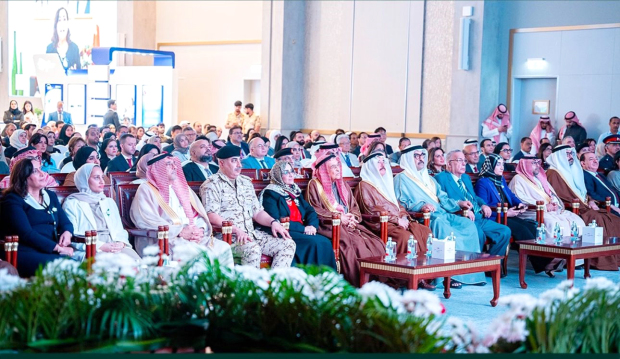
He was speaking on the opening day of a three-day Manama Health Congress and Expo, organised by the Supreme Council for Health, which got underway at the Crowne Plaza hotel in Manama yesterday.
“When the team of young Bahrainis came to Harvard a while back in order to learn how to do genome sequencing, everyone was very impressed with the talent that they had,” said Dr Haghighi, delivering the keynote speech titled ‘From AI and Genome to Global Health, Human Longevity and Economic Growth’.
“We were equally impressed with the fact that the team was comprised of only Bahraini scientists working on the project.
“The fact that the country is putting its faith in these bright young minds is admirable, and I am confident that the project will go on to be a major success.”
Dr Haghighi said that the genome programme will prove to be invaluable to the kingdom, benefiting not only the current generation of Bahrainis, but also the future ones.
“It truly is a model of hope for the people of the kingdom,” he said.
“It will help policymakers make more informed decisions, and it will also make medicine more precise.
“Imprecise medicine is one of the leading causes of deaths in the field, and investment in the project will significantly reduce misdiagnosis, and lead to longer, healthier lives for the people.”
Bahrain established the National Genome Centre in 2018.
Hundreds of campaigns have been held, in co-operation with ministries, government institutions, banks, universities and schools, to support the project.
By December 2023, the kingdom had already collected 42,000 samples.
If combined with artificial intelligence (AI), Dr Haghighi anticipates a major payoff once the project is complete, including a major improvement in treatment costs and health outcomes.
“Combining the results of the project with AI can make healthcare in Bahrain more cost-effective,” he said.
“Using AI in diagnosis can not only reduce treatment costs by up to 50 per cent, but also show a 40pc improvement in health outcome.
“Worldwide, it is estimated that AI in healthcare will be worth almost $188 billion by 2030.
“Computation has become more than a thousand times faster in the past eight years, which means that genome sequencing is no longer a luxury.
“There will be challenges, such as limited genomic infrastructure, low public awareness and lack of regulations, but I am confident Bahrain will have a top-class genome project once completed.”
nader@gdnmedia.bh
&uuid=(email))